
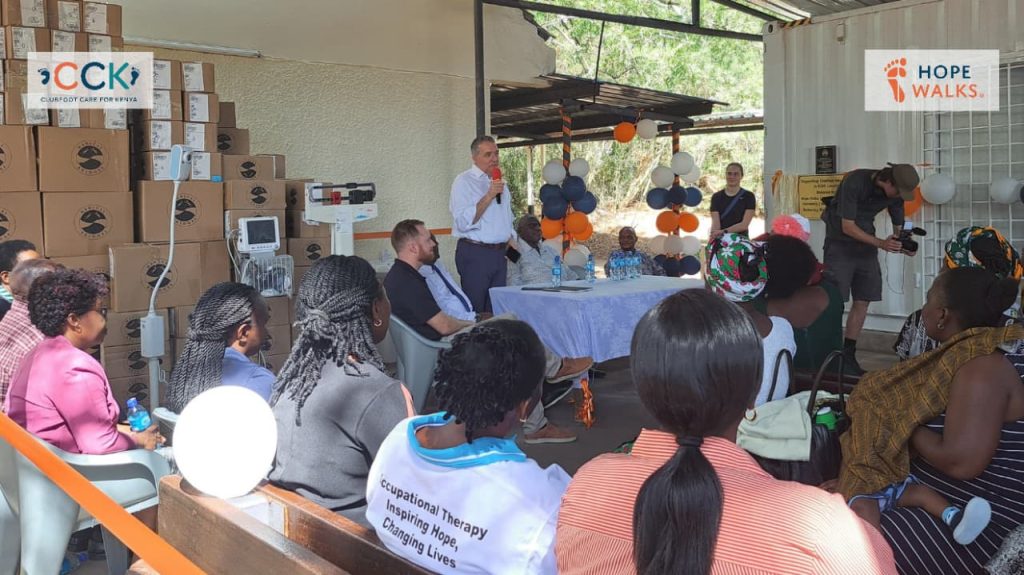
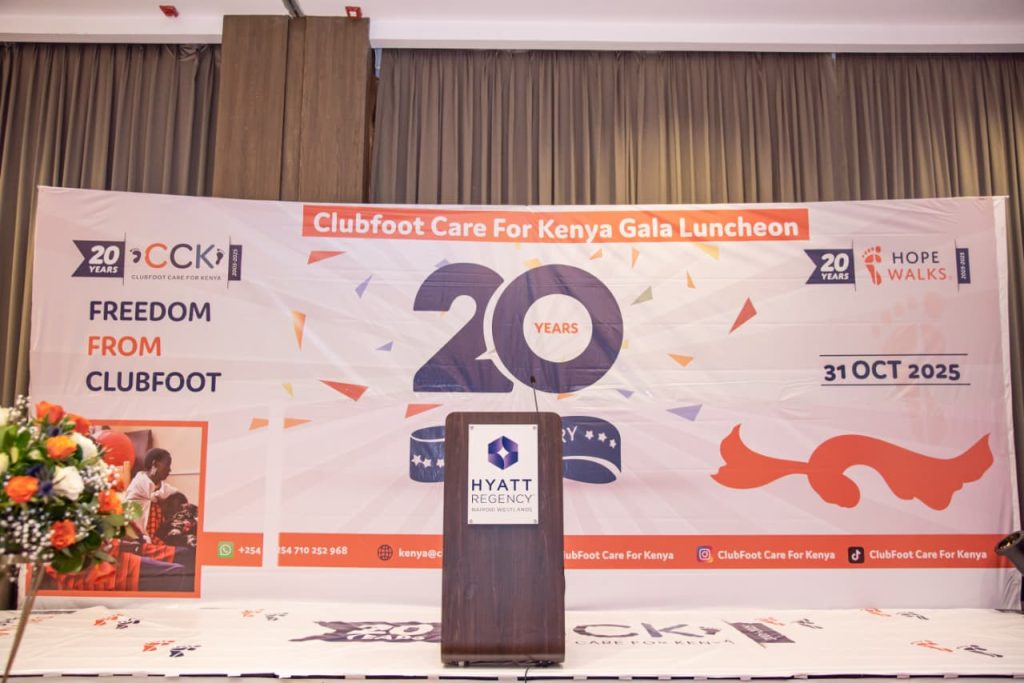


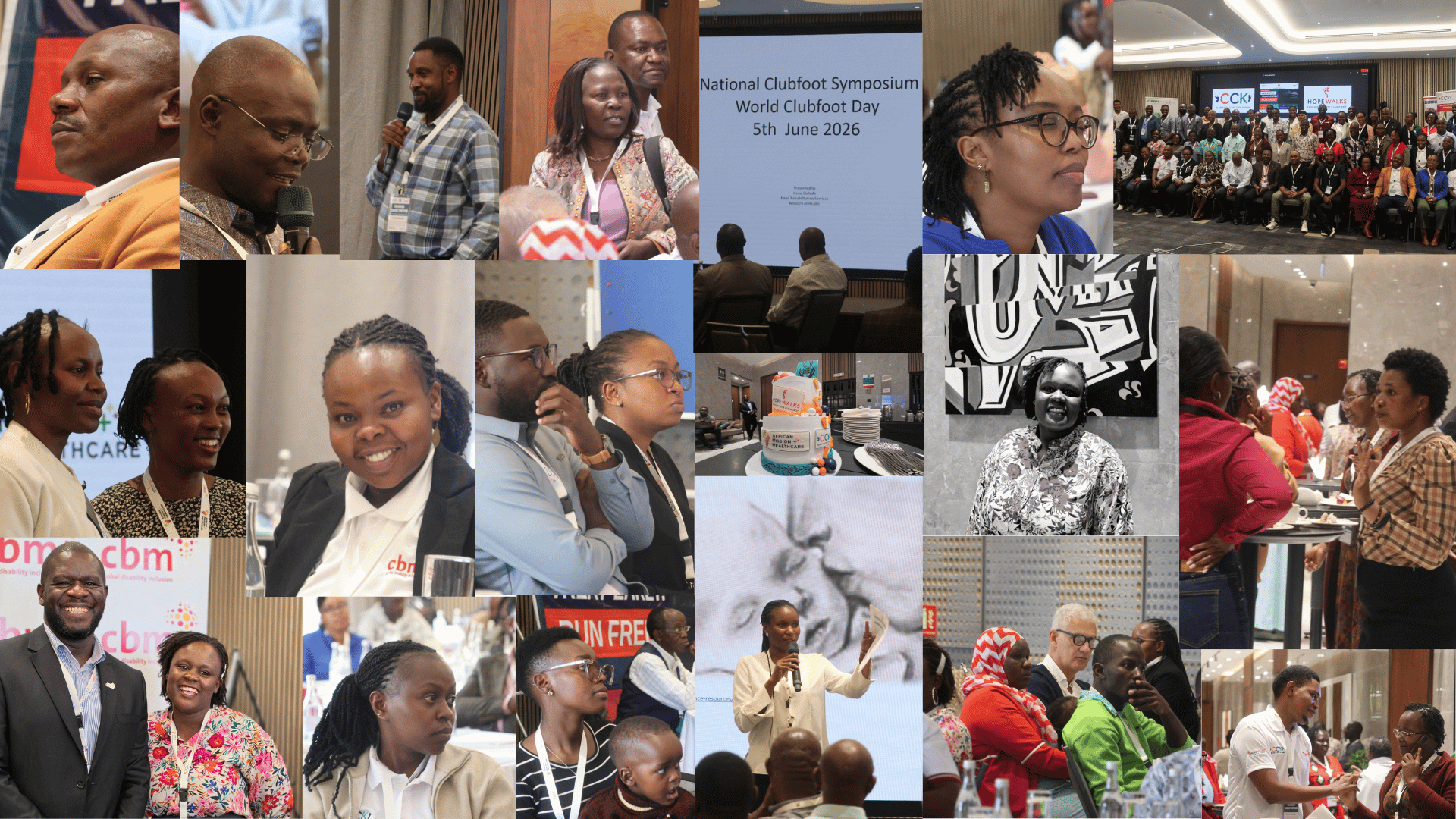
Healthcare professionals, policymakers, development partners, caregivers, disability advocates, researchers and media practitioners gathered in Nairobi on June 5, 2026, for Kenya’s first-ever National Clubfoot Symposium, held in commemoration of World Clubfoot Day 2026 that was on June 3, 2026.
Convened by Clubfoot Care for Kenya (CCK) with support from CBM Global Disability Inclusion and Africa Mission Healthcare (AMH), the symposium brought together stakeholders from across the country to strengthen collaboration, share knowledge and advance quality care for children born with clubfoot and other congenital deformities.
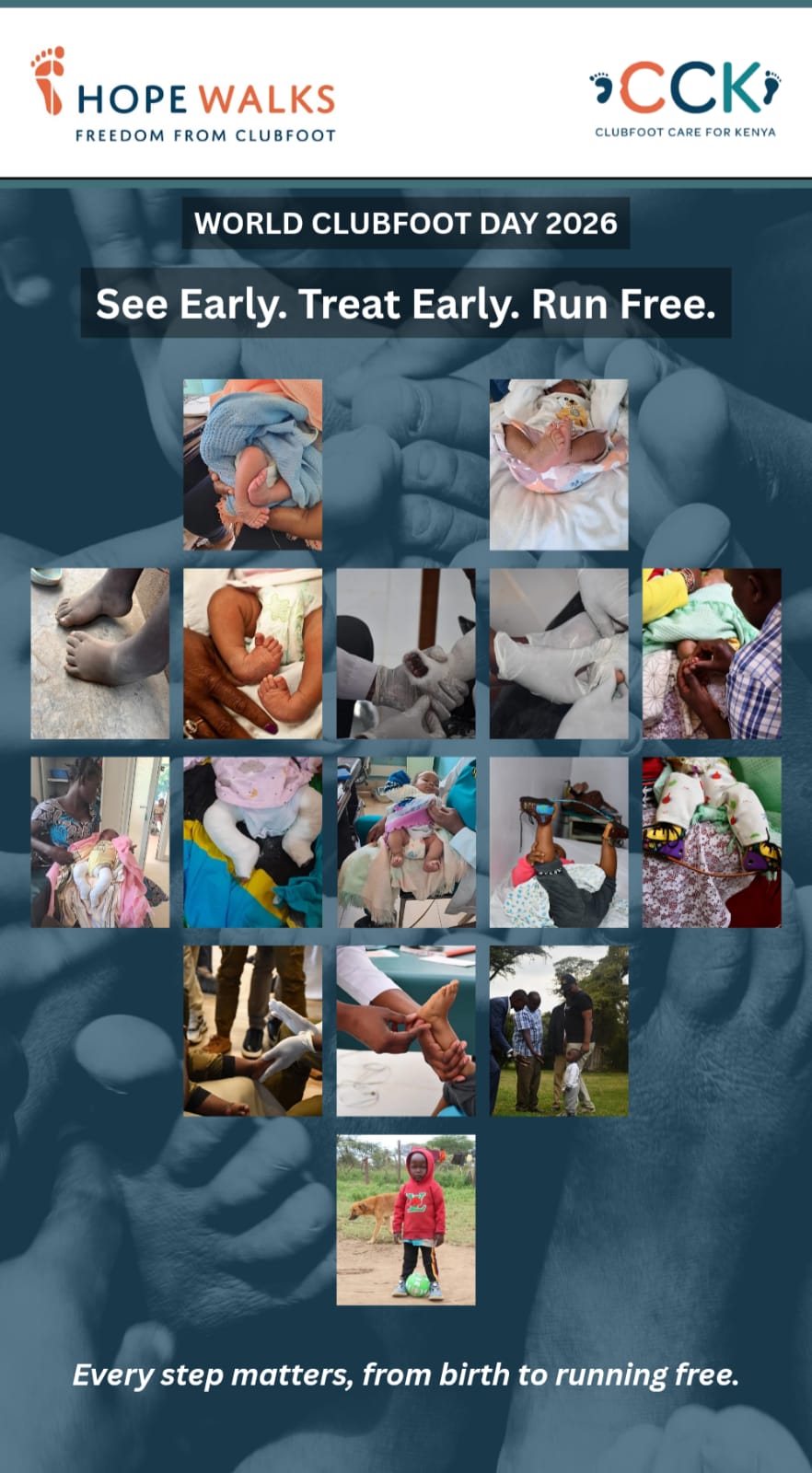
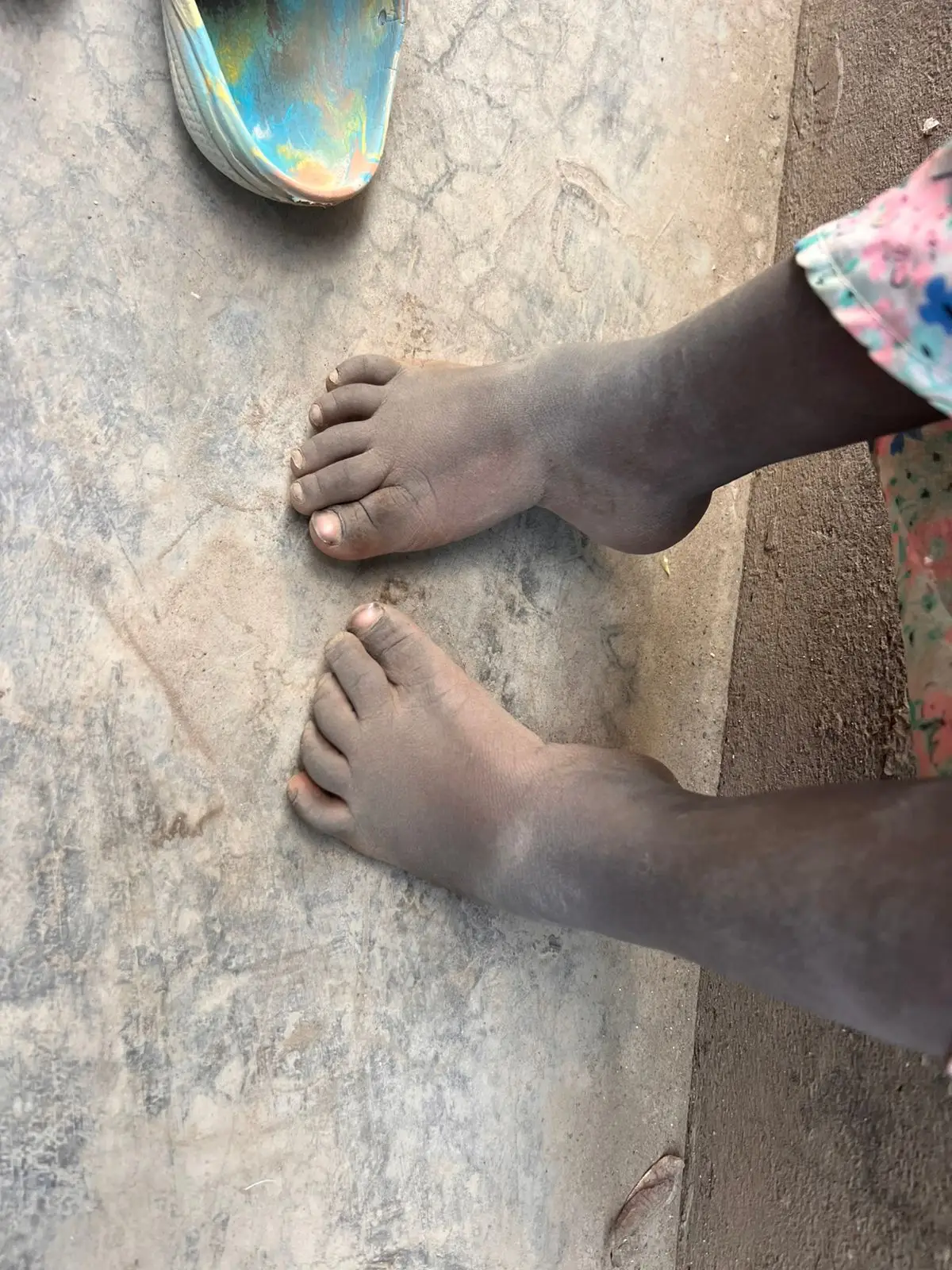
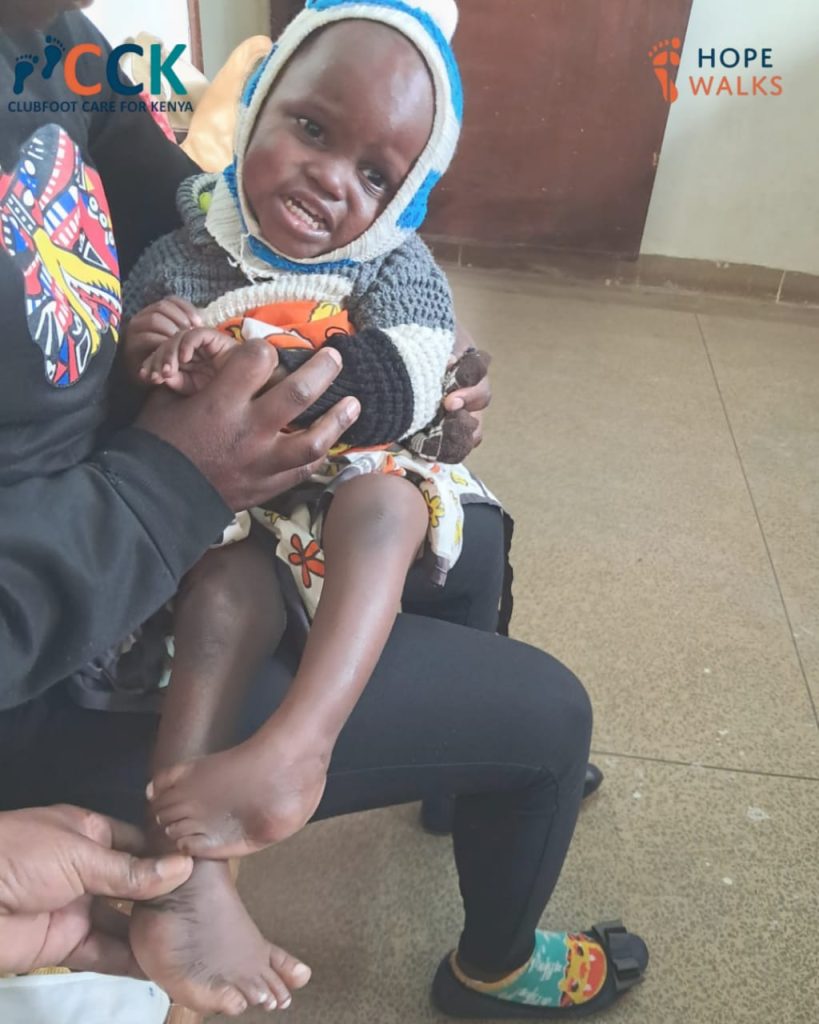
Held under the theme “See Early. Treat Early. Run Free.”, the symposium highlighted the importance of early detection, timely referral, evidence-based treatment and family support in transforming the lives of children born with clubfoot.
The event provided a platform for stakeholders to reflect on Kenya’s journey in clubfoot care, celebrate achievements, discuss emerging challenges and identify opportunities to further strengthen services for children and families. Discussions focused on clinical excellence, health systems strengthening, early intervention, disability inclusion and the critical role of partnerships in improving outcomes for children born with congenital deformities.
The symposium also served as an opportunity to celebrate the remarkable progress made in Kenya over the past two decades. Through collaboration between the Ministry of Health, county governments, healthcare facilities, development partners, caregivers and communities, thousands of children have accessed life-changing treatment and support.
For more than 20 years, Clubfoot Care for Kenya has worked to strengthen clubfoot services across the country. Through provider training, awareness creation, caregiver support, advocacy and health system strengthening, more than 30,000 children have received treatment, while access to services has expanded to nearly 30 hospitals, bringing quality care closer to families and communities.
Participants emphasized that while significant progress has been made, continued investment in awareness creation, healthcare worker training, referral systems and family-centred care remains essential to ensuring that no child is left behind. Discussions also highlighted the importance of integrating congenital disability care within broader maternal, newborn and child health services to ensure conditions such as clubfoot are identified and managed as early as possible.
A key message emerging from the symposium was that successful clubfoot treatment requires a strong continuum of care involving healthcare workers, caregivers, policymakers, development partners and communities. When children are identified early and receive timely treatment, they can walk, run, play, attend school and participate fully in society.
As Kenya continues to strengthen health systems and expand access to quality healthcare, the National Clubfoot Symposium demonstrated the power of collaboration in driving sustainable change. It also reaffirmed a shared commitment among stakeholders to ensure that every child born with clubfoot has access to timely, quality treatment and the opportunity to reach their full potential.
The symposium concluded with a renewed call to strengthen partnerships, promote early detection and referral, advance clinical excellence and continue building a future where every child is seen early, treated early and given the chance to live a happy, normal and fulfilling life.